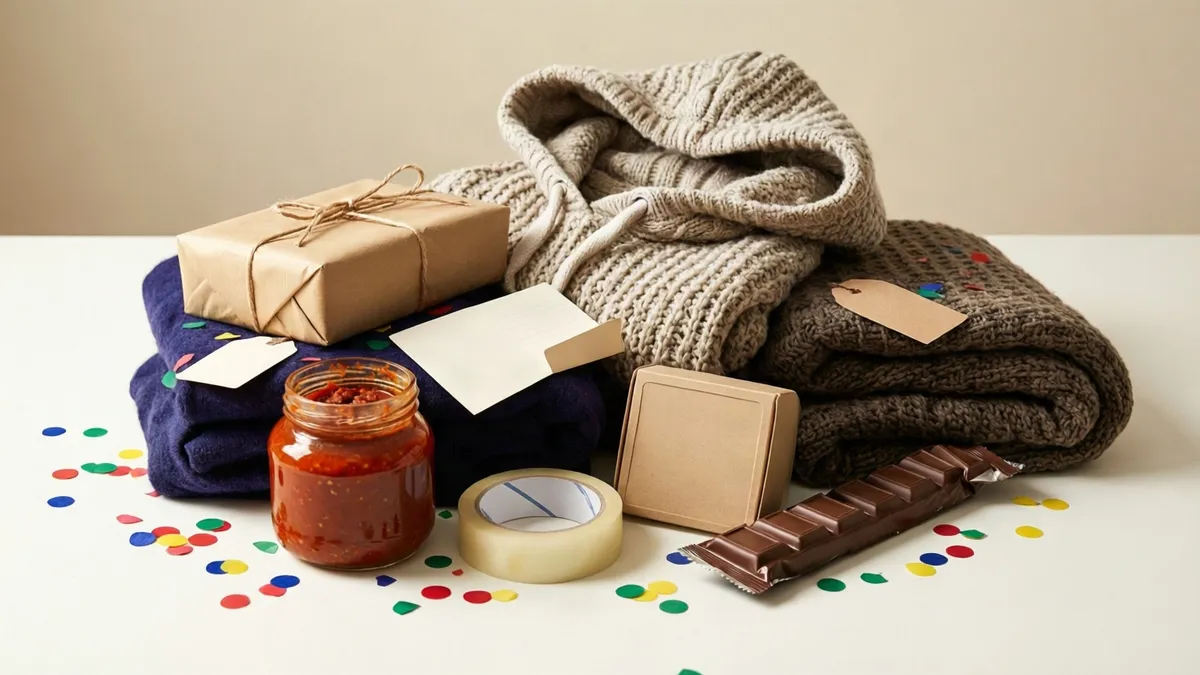
In short: The white elephant, also called Yankee swap or Dirty Santa, gifts on Amazon worth buying are not the funniest listings. They are the ones with a credible second life: something that reads across the room at the reveal and then gets used in February. Star ratings and gag photos predict laughs. Second-life evidence predicts steals.
We write buying guides, not reviews. We have not used the items on this page, and specs come from the manufacturer or the listing. Whatever Amazon shows when you click is the authoritative figure, because prices and ratings change constantly.
This article contains affiliate links. If you buy through one, we earn a small commission at no extra cost to you. We only recommend what we would suggest to a friend.
The Federal Trade Commission's endorsement guides, 16 CFR Part 255, require a disclosure like that one to be difficult to miss, so it sits above every link here. Our full affiliate disclosure has the rest.
Written by the editorial team behind this site — gift researchers who compile buying guides from public sources, manufacturer specs, and customer reviews rather than hands-on product testing.
You are shopping inside a loud season. The National Retail Federation's 2025 holiday survey, run with Prosper Insights & Analytics, found people planned to spend $890.49 per person on gifts, food and decorations. This is the survey's second-highest figure in 23 years. Against that, a $25 cap is a relief, and the cap is a ceiling, not a target. Our rules pillar explains the game itself if this is your first draw.
What we measured: We read the 10 ranking pages that surface for this search in full and compared how they pick gifts. Prices across those guides vary widely, with a median price point identified in our comparison. Most organize by price tier; none checks whether a gift has a life past the reveal. The snapshot is one day, and prices quoted in guides are not live listings, so treat every figure as approximate.
The Two-Job Test for White Elephant Gifts on Amazon
Every gift has two jobs. It must read from across a crowded room in one second, and somebody has to want it in the car home. Search results are built for the first job: the photos, the GIF loops, the box. Nothing in a listing rewards the second job, so nothing in a ranking rewards it either.
The result is a known failure mode. The yodeling pickle wins the reveal and dies in the glovebox. If a gift has no use past the party, it fails the two-job test no matter where it ranks. The next section gives you the filter the search bar will not.
What Star Ratings Actually Predict
High ratings answer one question: did buyers laugh near the reveal? They do not answer whether the thing survived January. A gag gift can sit at a high star rating because many people found it funny for an afternoon. Every one of those laughs is real data about the party and none of it is data about the car.
Treat reviews as evidence, then read them the long way. Sort past the newest, look for reviews from March onward, and search the text for "still use." A listing with a review count in the tens of thousands has buyer-proof demand; a listing with 40 reviews and photos of desks proves somebody kept it. That is the verdict you are shopping for.
The Steal Test: Reading a Listing Before You Buy
Skim the page like an appraiser. Here is our suggested checklist — copy it into your notes app before you shop.
- Does the main photo read at ten feet, or only in a thumbnail?
- What is physically left after the party — a tool, an empty wrapper, a prop?
- Does any review describe use a month later, in plain words?
- Would you explain this gift to your manager without a disclaimer?
- Does the size in the spec bullets match the fantasy in the photos?
- Can it ship and wrap by party day, per the delivery date on the page?
Run the six archetypes through it. The listing cue column is what the Amazon page shows you; the last four columns are our judgment, not a sourced figure.
| Gift archetype | Listing cue (what the page shows) | Reads across room? | Second-life evidence | Work-safe? | Steal likelihood (ours) |
|---|---|---|---|---|---|
| Consumable (hot sauce set, fancy snacks) | Wrapper art, pack counts | Yes, if box is big | Eaten by February | Almost always | High |
| Cozy item (blanket hoodie, heated socks) | Lifestyle shots | Yes, folded wrong | Lives on the couch | Yes | High |
| Group game (a party card game) | Box art, player count | Yes | Plays again at game night | Yes | High with the right room |
| Desk object (mini vacuum, zen garden) | Desk-scene photos, GIFs | Yes | Dust, unless genuinely useful | Usually | Medium |
| Visual gag (yodeling pickle, giant underwear) | Video loops of the laugh | Yes, instantly | None past the reveal | Risky | Medium, then dead |
| Practical tool (good tape, multitool) | Spec bullets, plain box | No | Used for years | Yes | Low at reveal, high in value |
Our take: Our call is consumables and cozy items for mixed rooms, and the practical tool only if you can wrap it suspiciously well. A low steal count at the reveal is survivable; a dead gag in February is not. If your room skews competitive, spend near the cap on the group game — it converts one steal into three.
Under $5 Is a Cap, Not a Punishment
Cheap gets a bad name because cheap gag is the default at that price. Flip it: at five dollars, only consumables and small practicals clear the two-job test anyway, so the cap does the filtering for you. A premium chocolate multipack or a genuinely good roll of double-sided tape reads fine and disappears by March.
The seasonal math is on your side. The NRF's 2025 press release reported 2024 holiday sales rose 4.3% over 2023 to $976.1 billion, and its 2025 forecast projects $1.01 to $1.02 trillion this November and December. Nobody in that economy is grading your gift on price. They are grading it on whether they took it home. For more affordable options, see under-$20 picks and the under-$25 guide.
For Kids, Coworkers and Other Edge-Case Rooms
Every audience constraint is the second-life test in different clothing. Family-friendly means the gag reads at age ten and the object survives the minivan. Kid-safe means checking the safety ground truth, not the age sticker's confidence. Per the U.S. Consumer Product Safety Commission's toy guidance, a toy is any object marketed as a plaything for children under 14. Yet the ASTM F963 testing and certification rules apply only to products intended for kids 12 and under.
Small parts are where listings lie by omission. The CPSC notes a small-parts ban already exists, with required labeling under the relevant federal regulations (§ 1500.19(b)(1)). Its ASTM F963 chart shows small-object rules demand third-party lab testing while labels do not. So for a room with kids, pick games and building sets built for younger ages than the oldest child present.
Work rooms need the same filter turned toward HR. Choose gifts that require no disclaimers. For an 18-year-old shopping for coworkers in their thirties, buy for the room's median age, not yours, and in a Southern Hemisphere summer, lean consumable and cold rather than cozy. Nostalgia works as a second life: a lava lamp or an old-school board game gets stolen because somebody already owns the memory. For bigger budgets, see gifts under $50, and for the gag aisle done safely, funny gifts that get fought over.
Returns, Rules and the One-Gift Question
Bring one gift unless the host says otherwise, and ask early rather than guessing. A return is possible but unromantic: the buyer opens their account, starts the return, and eats any restocking fee the listing states. The person who steals your gift cannot return it without the order number. Therefore, taping the gift receipt to the inside of the box is the kindest wrapping trick there is. Office exchanges follow the same logic, with one boss: your employer's gift policy outranks any rule on this site or the rules page. When a room sets a minimum spend instead of a maximum, the organizer is protecting sturdiness, not testing generosity — buy to it.
What white elephant gifts on Amazon actually get stolen most?
No measurement exists, so be suspicious of anyone who claims a ranking. The proxy we trust is second life: consumables and cozy items draw the most bidders because everyone in the room can use them by February. Gags get one laugh and zero bids in the second round.
Which gifts have the highest ratings and most reviews?
Whatever the current page tells you, because both numbers move weekly. Sort results by review count yourself, then read March-to-June reviews for the survival verdict. A high count proves people bought it; a recent review proves they still own it.
What are the best white elephant gifts under $5?
Consumables win flat out: a multipack of good chocolate, fancy instant coffee, name-brand candy in bulk. Small practicals come second, like quality double-sided tape or a nice pen. Skip anything electronic at this price, because the spec is usually the first lie.
Are there eco-friendly or sustainable options on Amazon?
Yes, and they pass the two-job test unusually well. Search reusable produce bags, beeswax food wraps, or bamboo utensil sets, then check the listing's materials section rather than the marketing copy. A gift that replaces a disposable gets used weekly, which is the strongest second life available.
How many gifts should each guest bring to a white elephant exchange?
One is the standard, and bringing more breaks the turn math the game runs on. Some hosts ask bigger groups for one gift per couple or household instead. Confirm with the host a week out, because a surprise second gift is a rules problem, not generosity.
How do you return a white elephant gift bought on Amazon?
The buyer returns it through their account within the standard return window, and the listing's return policy, not our word, is the rule. If you were the stealer rather than the buyer, you need the gift receipt or order number taped inside the box. No receipt, no return.
Dana Kowalski writes buying guides, not reviews; nothing here was tested by us.
Sources
- National Retail Federation (NRF) — "NRF Expects Holiday Sales to Surpass $1 Trillion for the First Time in 2025" (https://nrf.com/media-center/press-releases/nrf-expects-holiday-sales-to-surpass-1-trillion-for-the-first-time-in-2025) "Retrieved 2026-10-01".
- U.S. Consumer Product Safety Commission (CPSC) — "Toy Safety Business Guidance" (https://www.cpsc.gov/Business--Manufacturing/Business-Education/Toy-Safety) "Retrieved 2026-10-01".
- U.S. Consumer Product Safety Commission (CPSC) — "ASTM F963 Requirements" (https://www.cpsc.gov/Business--Manufacturing/Business-Education/Toy-Safety/ASTM-F-963-Chart) "Retrieved 2026-10-01".
- Federal Trade Commission — "Guides Concerning the Use of Endorsements and Testimonials in Advertising" (https://www.ftc.gov/legal-library/browse/federal-register-notices/guides-concerning-use-endorsements-testimonials-advertising) "Retrieved 2026-10-01".